Posts

Blog #9 Argument & Counter Argument

Image
  Argument:   The middle class seems to be disappearing and the gap is widening between the upper class and the lower class sectors of society. The socioeconomic status of children and their families has a profound effect on the children’s education, even in a country that prides itself on equal opportunity and fair treatment of all. A higher level of education is needed for high-paying jobs that can support a family but in recent years school funding is diminishing and removing one more source of hope for ending the cycle which results in creating a huge college completion gap between high and low-income students. In addition to  Merit- aid is a steadily growing system all Universities have and it is unfair because more than half of the aid goes to affluent students compare to low-income students. Board-based admission (Based on SAT/ACT) also limits post-secondary education access for low-income students, universities should have “test-optional”, this can benefit and hel...

Blog #10 Abstract & Works Cited

 Abstract:  An education from college can provide a path out of the poverty line for most students, but there is indeed a difference between how this is witnessed between the high and low-income college students. There have been low-income students in selected educational institutions that have reported some feeling of alienation, isolation, and marginalization. However, it may be necessary that the voices of the low-income students who have successfully navigated the experience of college be part of the research in order to properly understand the gap between the high and low-income students (Garriga and Keightley). This gap has to be reduced to promote income equality and better employability among youth throughout all communities whether their income is high or low. These studies will be applying the strengths-based theoretical framework in looking at the topic and will be examining the positive environmental and personal protective factor that has been helping studen...

Blog#8 Case

 My case will include a plan of the research that has to be done according to the resources that could be achieved in this scenario. Throughout the previous research works, it has been found that lower-income students with a high amount of proficiency in education have a higher amount of dropout rates in the colleges (Duke-Benfield and Saunders: 117). This has proven to be quite alarming for the college authorities and the Department of Education at the same time. According to the sources, it has been confirmed that only some students from the lower-income groups have performed at the highest levels (Dynarski et al., 17). The alarming rate of dropouts is quite problematic for society and this is a big concern for the future development of the society in the perfect measures. Some secondary resources like books and articles will be used in this paper to show that it has been very important. This will undermine the knowledge about the college dropout rates and look to provide some ...

BLOG #7 Theoretical frame

Image
   Growing gap in College Completion In the past two decades, as the number of college enrollment has increased in the USA, another issue that has also attracted attention is the growing gap in college completion, especially among low-income students. While the high-income students have a strong academic background by attending better high schools and have wealth to finish college, the low-income students face the opposite and the percentage of students not completing their degree in six years is growing significantly. The higher fees in the higher education sector are one of the major problems in the USA, which also results in massive student debts (Brint). The article named "Equalization or selection? Reassessing the “meritocratic power” of a college degree in intergenerational income mobility.”Written by Xiang Zhou in 2019, highlights the implementation of the general equilibrium theory and helps bridge this gap. The education policies will be determined on three types of s...

Extra Credit: Unlikely: A Pursuit of a Better U (documentary)

Image
The video that I watched was about the university dropout crisis. The link to this documentary (trailer) is: https://www.youtube.com/watch?v=B5YASi5J4Kc      The title of this documentary is “ Unlikely: In Pursuit of a Better U”. This documentary sheds light on the underbelly of the higher education system -the student dropout crisis. Not everyone knows this, but the US has one of the worst college completion rates in the entire world - less than 50% of students who start college ever finish. Now there are more than 35 million Americans who started college but never finished, leaving them saddled with debt, and behind their peers in earning power. The documentary has few featuring interviews with LeBron James, Howard Schultz, Michael Crow, Bridget Burns, and America's leading voices in education, this penetrating and personal new documentary investigates America's college dropout crisis through the lives of five diverse students as they fight for a second chance at oppor...

Literature Review #5

Image
  Citation: Cox, Rebecca D. "Complicating conditions: Obstacles and interruptions to low-income students' college “choices”." The Journal of Higher Education 87.1 (2016): 1-26 Summary:    This article presents the results of a qualitative, longitudinal study of the high school-to-college transition for a sample of 16 low-income, Black and Latino students at two inner-city high schools in the Northeastern United States. Drawing on interviews with students over a three-year period—from their junior year of high school through one year after high school graduation—this analysis highlights the interruptions to students’ postsecondary plans. In this sample, students’ actual postsecondary paths, which included delayed college enrollment and two-year college matriculation, diverged substantially from the initial plan participants developed during high school. Ultimately, the findings illustrate how these students’ life circumstances engender decisions that preclude the kinds of ...

Literature Review #4

Image
  Citation: Saul, Stephanie. "The Pandemic Hit the Working Class Hard. The Colleges That Serve Them Are Hurting, Too." 02 Apr. 2021. Web. 04 Apr. 2021. About Author:  Stephanie Saul attended public schools in New Albany, where she showed an early interest in journalism as editor of the high school newspaper. She covers national politics. Since joining The New York Times in 2005, she has also written about the pharmaceutical industry, education, and the illicit foreign money fueling Manhattan’s real estate boom. Previously she worked at Newsday, where she won a Pulitzer Prize for investigative reporting. Summary: (Not a scholarly article)  The article describes a widespread decline in community college enrollments, which will drive down graduation numbers for low-income students across the board. Also, community colleges largely serve low-income students specifically Black and Latino students a widespread decline in community colleges will lead to increase in an inequalit...

Blog #6 - Visual

Image
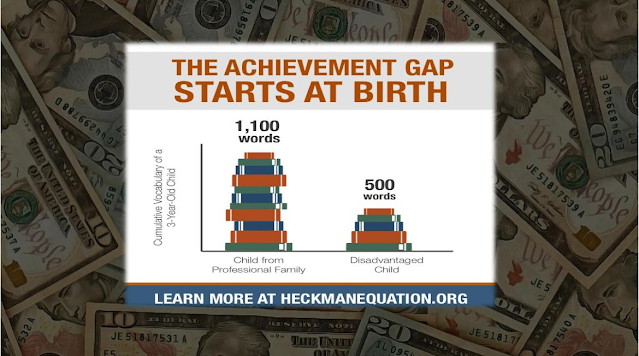
  This image shows how the achievement gap starts at birth, college students from disadvantaged families perform less well than high-income students on most measures of academic success including standardized test scores, grades, high school completion rates, and college enrollment, completion rates as well as lacking communication skills.

Blog Post #5

Research Question: How can the gap between high- and low-income group students in college affect their professional careers? What role does the government need to play in covering the tuition costs for the students from the low-income groups? Do merit-based admissions affects low-income students? What can be done in order to decrease the staggering cost of college that’s weeding out students who are disproportionately low-income? If the widening college completion gap fracturing the American Dream and its economy then why the government and policymakers aren’t doing anything to fix it? Sources: Brint, Steven. “Can We Fix the College Inequality Problem?” The American Prospect , 10 Dec. 2019, prospect.org/culture/can-we-fix-the-college-inequality-problem/.  Cabrera, ByJeff. “Poverty And The College Completion Crisis.” GenBiz , 13 Aug. 2018, genbiz.com/poverty-and-the-college-completion-crisis.  Center, NSC Research. “High School Benchmarks - 2019.” National Student Clearinghouse...

Literature Review #3

Image
  About the Author:  Sean F. Reardon is an American sociologist who currently serves as the Endowed Professor of Poverty and Inequality in Education at the Stanford Graduate School of Education, where he also is a member of the Steering Committee of the Center for Education Policy Analysis. Citations:  Reardon, Sean F. “The Widening Income Achievement Gap.” Educational Leadership , vol. 70, no. 8, May 2013, pp. 10–16. EBSCOhost , search.ebscohost.com/login.aspx?direct=true&db=eric&AN=EJ1029019&site=ehost-live. Summary of the Article: Sean F. Reardon conducted a comprehensive analysis of research to answer these questions and came up with some striking findings. In this article, he shows that income-related achievement gaps have grown significantly over the last three decades, even as black-white achievement gaps have closed. These gaps are already large when children enter kindergarten; in fact, they do not grow substantially during the school years. Gaps bet...

Literature Review #2

Image
  About the Author:  Alanna Bjorklund-Young - Graduated with a Ph.D. in Economics in the year 2017 and has taught in 4 schools for about 1-2 year/years each. Won awards for undergraduate teaching. Currently, she is working as an assistant professor at Johns Hopkins University School of Education. Additionally, she has written several papers that investigate the impact of teaching skills on student academic and non-academic outcomes and is interested in the impact of education policy on student outcomes. Citations:  Bjorklund-Young, Alanna. "Family income and the college completion gap." (2016). Summary of the Article: This article has the latest research released in 2015 confirms that low-socioeconomic status (SES) students were less likely to complete their college education. After graduating high school, only 14 percent of low-SES students received a bachelor’s or higher degree within eight years compared to 29 percent of middle-income students. Furthermore, it talks a...

Blog #4

  Richa Patel Professor Goeller Research in Disciplines: College February 26, 2021 Working title: College completion gap between high and low-income students Topic          The topic that has been chosen for this proposal is to assess the contribution of financial aids on the academic establishment of the students from low-income groups. This is a very significant topic among the educational sector since low-income students lack the affordability towards availing the courses. They can attend part-time courses, which is not a permanent solution, as they drop these courses for their financial conditions. This situation has to be changed at any cost because this gap will determine the rates of unemployment in the country ( Bjorklund-Young: 24). This gap has to be reduced to promote income equality and better employability among youth throughout all communities whether their income is high or low. Proper investigations are needed in terms of a...